
NASA is officially “nuking” the Lunar Gateway and sending it to Mars instead
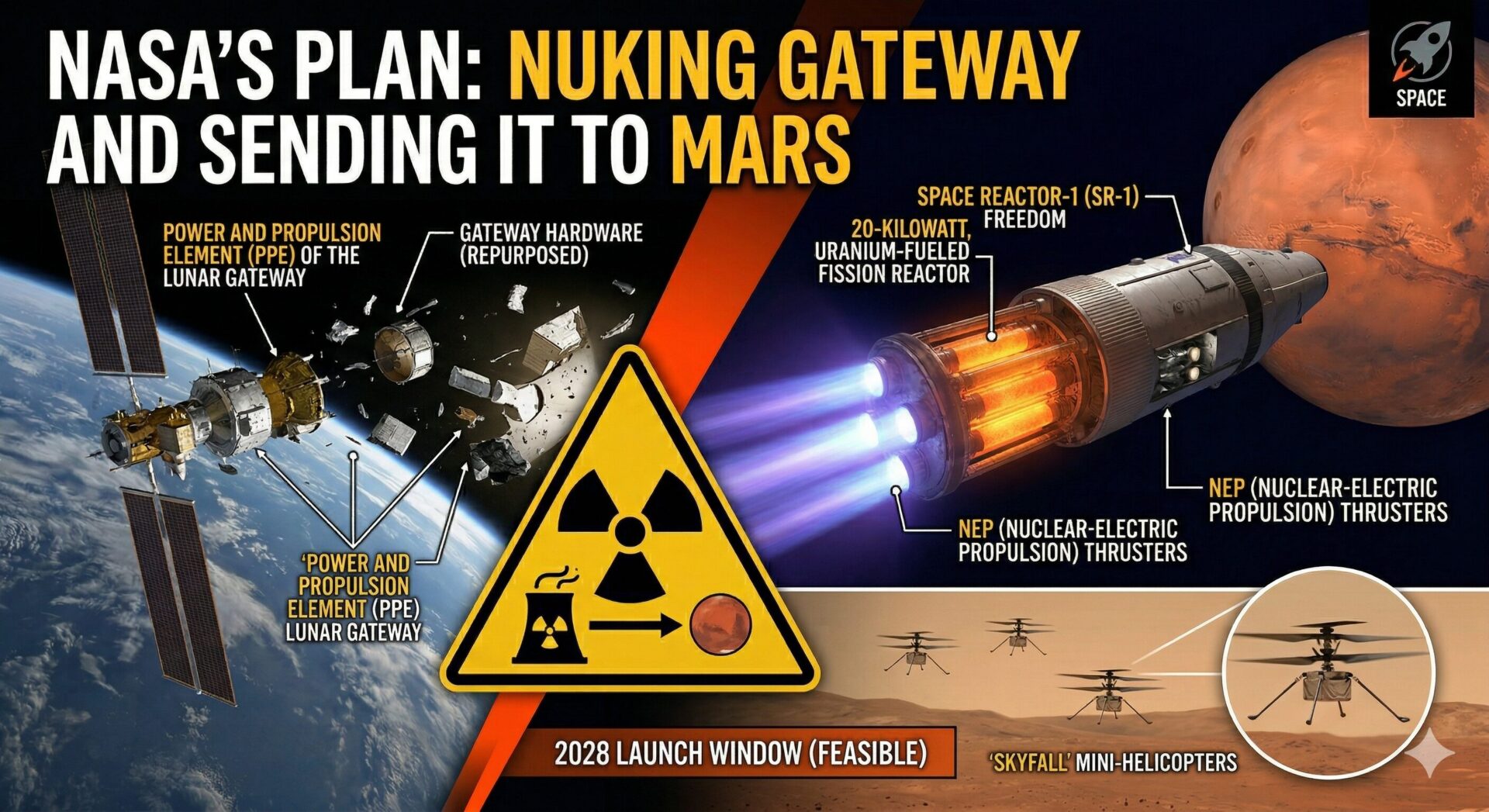
If you’ve been following the rumors about NASA halting the orbital Gateway to focus on a surface moon base, we finally know what’s happening to the hardware that was already built. Here is the breakdown of NASA’s newly announced Space Reactor-1 (SR-1) Freedom mission, and why I think it’s a massive deal for deep space exploration:
🚀 Cannibalizing Gateway: Instead of letting the already-constructed Power and Propulsion Element (PPE) gather dust, NASA is repurposing it. They are integrating a 20-kilowatt uranium-fueled fission reactor onto the bus, creating the world’s first nuclear-powered interplanetary spacecraft.
⚛️ Nuclear-Electric over Thermal: They aren’t going with the high-thrust, heat-driven nuclear-thermal rockets (like the canceled DRACO mission). Instead, SR-1 will use Nuclear-Electric Propulsion (NEP). The reactor will power an array of plasma thrusters, making it the most powerful electric propulsion system ever flown in space.
🚁 “Skyfall” Helicopters: The payload? Oh, just a fleet of three Ingenuity-class mini-helicopters dubbed “Skyfall.” By launching in late 2028, this nuclear cruiser will drop a literal drone squad into the Martian atmosphere to scout chaotic terrains we’ve never been able to explore safely with traditional rovers.
For the first time in over 60 years, the US is putting a nuclear reactor in space. By scaling down the power requirements and leveraging existing hardware, NASA is actually making a 2028 launch window feasible.
Let me know what you think in the comments—are you team Moon Base or team Nuclear Mars?
#NASA #SpaceExploration #Mars #SpaceTech #NuclearPropulsion #Skyfall